
Does Music Change the Taste of What We Drink?
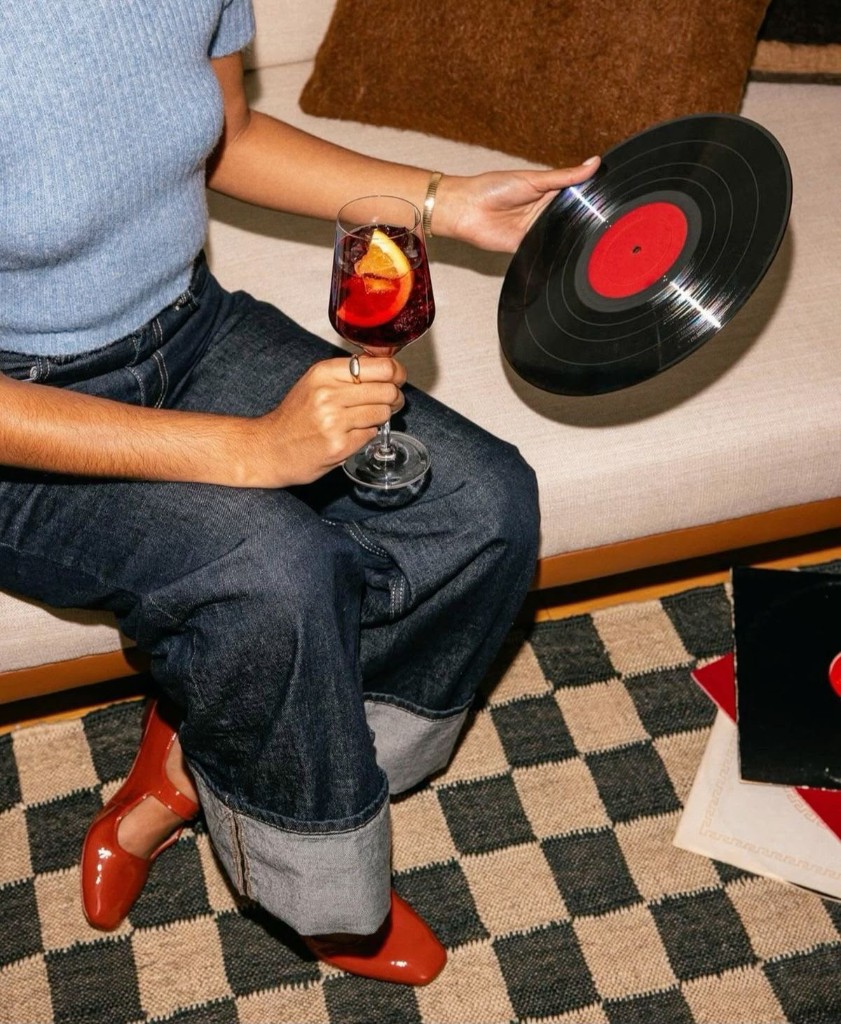
Imagine you are sitting at the same table with a friend.
In front of you is the same cocktail.
The same recipe, the same glass, the same ice.
You take the first sip, and then I ask you a single question:
"Are you really tasting the same thing?"
Most of us answer "yes" without thinking. After all, if what we are drinking is the same, the taste we get should be the same too.
That is what seems logical.
But what is logical is not always what is true.
While preparing this piece, I read Charles Spence's book Gastrophysics and various academic studies on music and taste perception. Honestly, what surprised me most was seeing the scientific counterparts of behaviors I had observed in bars for years.
As a bartender, I witnessed countless times how the same drink was interpreted differently in different settings. A guest might find a cocktail "too strong," while on another day the same recipe could be described as "balanced." I used to think this was only about mood.
It turns out the matter is a little more complex.
Taste is not as simple a sensation as we assume.
In fact, according to scientists, what we call taste does not happen only on our tongue. When our brain evaluates a sip, it processes dozens of different pieces of information at once:
The colors we see, the sounds we hear, smells, textures…
Our expectations.
And even how we feel that day.
In short, we do not merely taste food and drink.
We experience them.
You do not need to go to a laboratory to understand this.
Think of your favorite coffee. Would you enjoy it more from a thick porcelain cup, or from a thin plastic glass?
Most of us prefer the first option.
Yet the coffee is the same.
What changes is not the coffee itself, but the way we perceive it.
The interesting part begins with music.
In a striking study conducted in 2011, participants were given the same wine to taste. The wine did not change. But different music was played with each sip.
The results were surprising.
Participants described the same wine sometimes as more powerful, sometimes more refined, sometimes heavier, and sometimes more lively.
The liquid in the glass was the same.
What changed was the information entering their ears.
These studies later came to be known as "sonic seasoning."
It may sound a little strange, but on reflection it is not so unfamiliar. Just as a pinch of salt can change the character of a dish, certain sounds can affect how the brain interprets taste.
Research shows that high-frequency sounds can be associated with sweetness perception, while lower, fuller frequencies can be linked to bitterness and body.
In other words, our ears sometimes interfere with our tongue's work.
Perhaps that is why some drinks feel as though they belong to certain atmospheres.
Think of a Negroni.
Sipped in a dimly lit jazz bar, it takes on one character.
The same Negroni, in a crowded festival field, leaves an entirely different impression.
Because the human mind does not place experiences in separate boxes. It does not put music in one place, taste in another, and memories in a third.
It combines them all.
And in the end it produces one thing:
Experience.
We sometimes call this atmosphere.
Scientists call it multisensory perception.
The names may change.
But what is being described is the same.
Here I would like to suggest a small experiment.
This evening, take your favorite coffee or chocolate.
Try the first bite in silence.
Then play a calm piece you love.
A few minutes later, try the same thing again with upbeat, energetic music.
You may not feel a huge difference.
Or perhaps you will.
But you will realize that you never taste anything with your tongue alone.
So what is the answer to the question?
Does music really change the taste of what we drink?
If we ask the question chemically, the answer is no.
A song coming from a speaker cannot change the recipe of the cocktail in your glass.
But if we ask the question from a human perspective, the answer is largely yes.
Because we do not taste drinks with our tongue alone.
We taste them with our ears, our eyes, our memories, our expectations, and the moment we are in.
Perhaps that is why we remember some drinks even years later.
Not for what was in them.
But for who we drank with.
Where we drank.
And the song that was playing.
While preparing this piece, various academic studies on music, taste perception, and multisensory experience were reviewed, chief among them Charles Spence's Gastrophysics. Some observations in the text are based on my personal experience as a bartender.
My aim was to explore together the invisible bridge between the laboratory and the bar counter.
Wishing you peace.