
Sun and Concrete: The Two Souls of Electronic Music
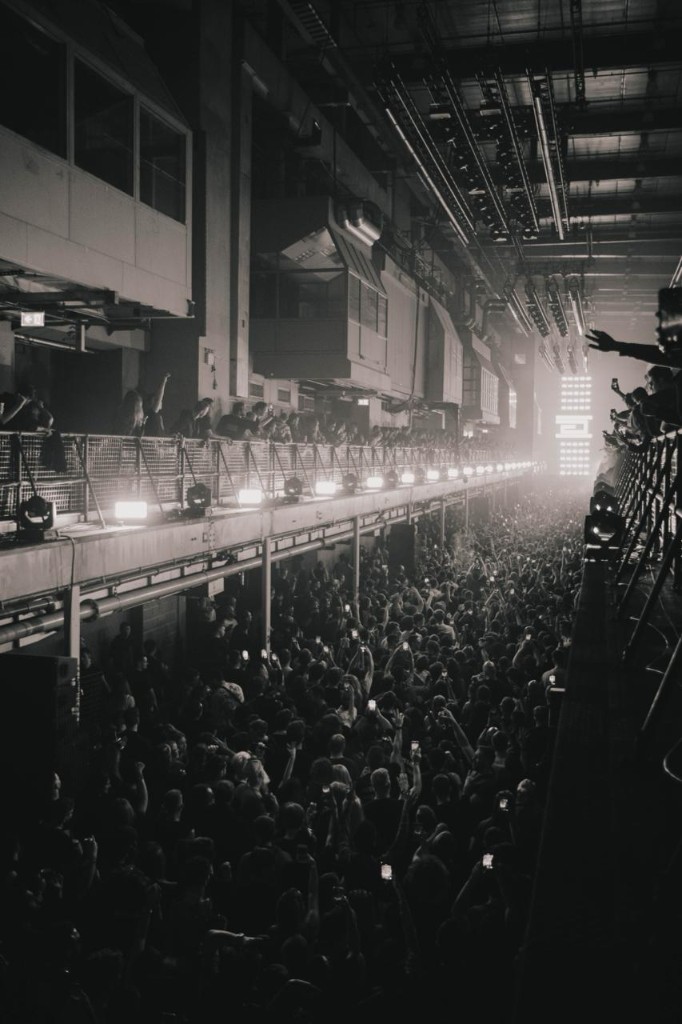
How can the same music belong both to a sunset and to an abandoned factory?
When you close your eyes at an electronic music event, where do you imagine yourself? On a horizon painted orange by the sun setting over the sea? Or in a dark warehouse surrounded by concrete walls, where time seems to stand still?
What is interesting is that both are considered natural habitats of electronic music.
Today electronic music may look like a single culture, but it actually carries the legacy of two very different worlds. One was shaped by the warm winds of the Mediterranean. The other grew in the empty factories of a city reborn after the Cold War. One is called Ibiza. The other is called Berlin.
To understand electronic music's identity today, we first need to understand the story of these two cities.
When we talk about the origins of electronic music, we usually speak in genres: house, techno, trance, ambient... Yet the birth of cultures often does not begin with music. It begins with people.
Ibiza is one of the best examples of this. In the 1960s, the island was not yet the party capital of the world. Hippies, artists, travelers, and people seeking alternative ways of life began arriving from different parts of Europe. What drew them was not only music. It was the feeling of freedom.
Ibiza's first culture was, in fact, a culture of escape. People stepped away from the rules of everyday life, tried on new identities, and opened a wider space for themselves to live in.
By the 1980s, clubs began to appear. Figures like DJ Alfredo could play disco, rock, house, pop, and ambient tracks back to back in the same night. Genre boundaries did not matter. What mattered was the emotion left in the listener. This approach, later known as Balearic Beat, reflected the spirit of Ibiza.
Here music was not the goal; it was part of the experience.
Berlin's story was very different. When the Berlin Wall fell in 1989, the city was physically reunited, but it also entered a search for a new identity. Especially in East Berlin, there were hundreds of abandoned buildings, warehouses, and industrial spaces. These voids quickly became the playground of a new culture.
When techno, born in Detroit, reached Europe, it took on a completely different meaning in Berlin. It became harder, more minimal, and darker. Here music was not an escape, but a way of creating a new social space.
The difference between Ibiza and Berlin is actually less about music than about why people use music. In Ibiza, people dance to get away from their lives. In Berlin, they dance to open a new space for themselves within life.
Ibiza culture is built more on the idea of celebration: vacation, freedom, discovery, socializing, new people, new experiences, and new stories. In a sense, Ibiza is a temporary utopia where everyday life is suspended.
Berlin answers a different need. Here clubs are not merely places of entertainment. Many researchers define Berlin club culture as an alternative social space. People leave their status, professions, and everyday identities outside the door. Once inside, they are only part of the crowd.
Perhaps that is why many clubs in Berlin enforce strict rules against photography. Because the point is not to be seen, but to disappear inside the experience. In Ibiza, people want to share the moment. In Berlin, they want to stay inside it.
And this is where the most interesting part begins. Because these two cultures do not only offer different ways of living; they also speak to different needs of our brain.
The Ibiza experience is largely built on the feeling of novelty. A new place, new people, new sounds, new landscapes... In psychology, it is known that experiences of novelty have a strong relationship with the dopamine system. That is why listening to music at sunset, outdoors, and within a large community creates an intense sense of aliveness in many people.
This is exactly what Ibiza promises: a few hours in which life feels a little bigger and a little more beautiful.
In Berlin, the situation is different. Techno's repetitive structure, long sets, and minimal transitions carry the listener into a more inward mental state rather than constant stimulation. Rhythms that continue for hours can alter the sense of time. Thoughts may slow down. A person may find themselves in a strange solitude and inwardness, even while standing in a crowd.
That is why many people describe techno dancing not as a form of entertainment, but as a moving meditation. Dance here is not performance. It is a kind of awareness practice.
Perhaps this is electronic music's greatest strength: it can make room both for celebration and for reflection.
Today, in many festivals, clubs, and events around the world, we still see traces of these two cultures. Ibiza's spirit lives on in melodic house sets played against the sunset. Berlin's lives on in long techno sets echoing through dark warehouses.
Sometimes we feel closer to one. Sometimes to the other.
Because in some periods of life we need to escape. In others, we need to stop and listen to ourselves.
Perhaps that is why electronic music has not lost its power for decades. Because it contains both sun and concrete. Both celebration and confrontation.
And whether we are aware of it or not, most of us need both at different stages of our lives.